
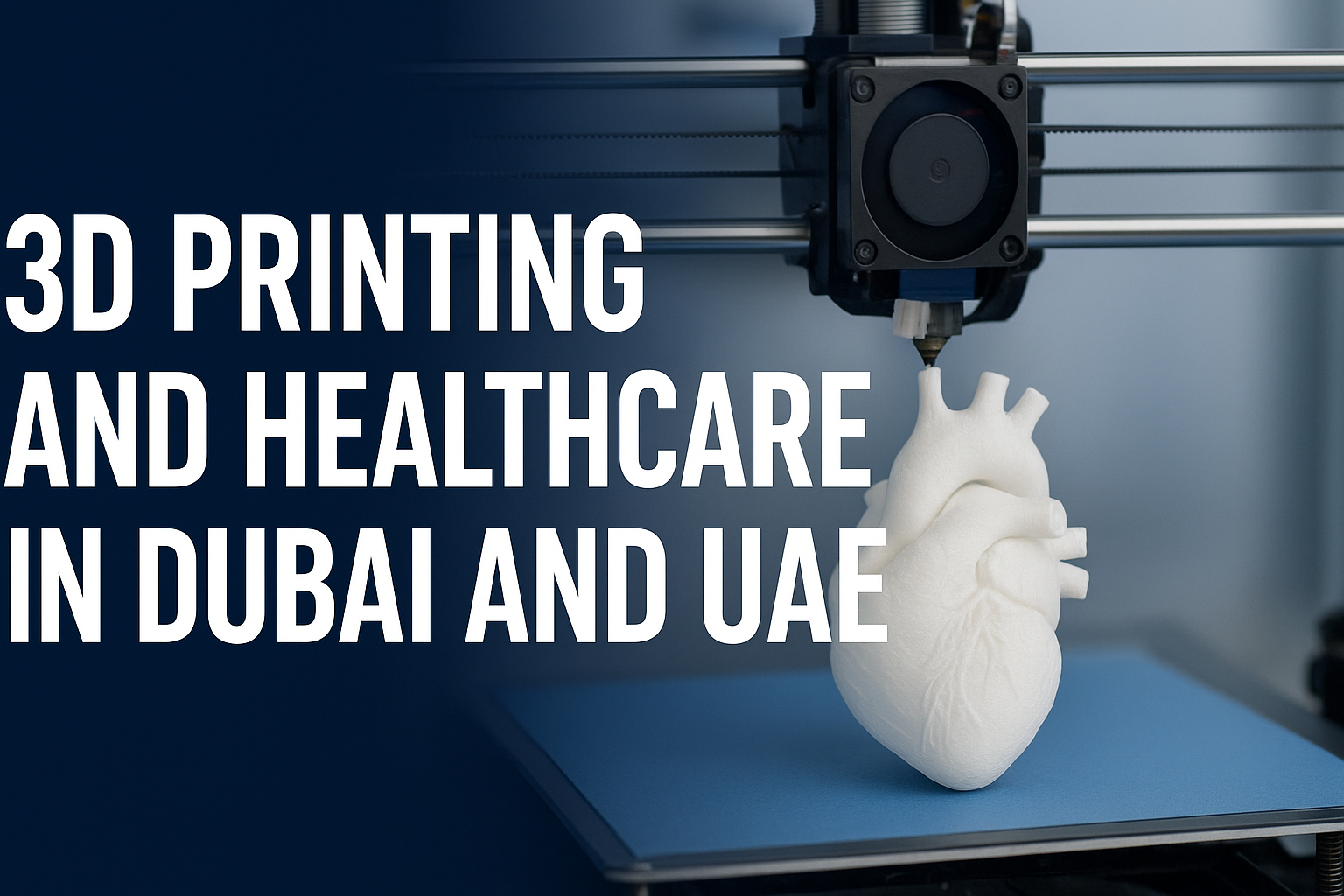
Dubai and the UAE have always been pioneers in adopting cutting-edge technologies, and 3D printing in healthcare is no exception. The region is rapidly transforming into a hub for medical innovation, where hospitals, research centers, and startups are leveraging 3D printing to enhance patient care, improve surgeries, and reduce treatment costs. From custom prosthetics to 3D printed organs, healthcare in Dubai and across the UAE is experiencing a groundbreaking shift.
In this blog, we’ll explore how 3D printing and healthcare in Dubai and UAE are shaping the future of medicine, the key benefits, applications, challenges, and what lies ahead.
Why 3D Printing Matters in Healthcare
3D printing, also known as additive manufacturing, enables doctors and researchers to create highly customized medical tools, implants, and even biological tissues. Unlike traditional methods, it is faster, more cost-effective, and tailored to individual patient needs.
Dubai’s 3D Printing Strategy, launched in 2016, has positioned the UAE as a global leader in this sector. The healthcare industry is one of its primary focuses, aiming to improve lives while reducing dependency on imports.
The Role of 3D Printing in Dubai’s Healthcare System
Dubai’s healthcare institutions are integrating 3D printing into different medical fields:
- Customized Prosthetics: Lightweight, affordable, and patient-specific prosthetics are being developed.
- Surgical Guides & Models: Doctors use 3D-printed anatomical models to plan complex surgeries.
- Dental Implants: Clinics in Dubai use 3D printing for crowns, bridges, and orthodontics.
- Bioprinting: Research in the UAE is advancing towards printing tissues and organs for transplants.
Benefits of 3D Printing in UAE’s Healthcare
- Personalized Treatment – Each patient gets a tailored medical solution.
- Cost Reduction – 3D printing reduces manufacturing and import costs.
- Faster Surgeries – Surgical planning with 3D models decreases operation time.
- Accessibility – Makes advanced treatments available to more patients.
- Innovation Hub – Strengthens Dubai’s position as a medical tourism leader.
Government Initiatives Supporting 3D Printing in Healthcare
The UAE government plays a critical role in accelerating this transformation. Key initiatives include:
- Dubai 3D Printing Strategy – Focused on healthcare, construction, and consumer products.
- Dubai Health Authority (DHA) – Introduced 3D printing in dentistry and orthopedic care.
- Partnerships with Global Tech Firms – Collaborations with international healthcare innovators.
These initiatives aim to reduce healthcare costs by 50% and make Dubai a global medical hub by 2030.
Challenges of 3D Printing in Healthcare
While the technology is promising, there are hurdles to overcome:
- High initial investment in equipment
- Regulatory approvals for 3D-printed implants
- Shortage of skilled professionals in bioprinting
- Ethical concerns with organ printing
Dubai and the UAE are addressing these challenges by investing in training, research, and innovation.
Future of 3D Printing and Healthcare in Dubai and UAE
The coming years will see a major boom in 3D printing applications in UAE healthcare. By 2030, experts expect:
- Widespread bioprinting of tissues
- Smart 3D-printed implants with sensors
- Growth in medical tourism driven by innovation
- AI-powered 3D printing integration for better accuracy
The UAE is not just adopting this technology but shaping the global conversation around it.
FAQs
How is 3D printing used in healthcare in Dubai?
Is 3D printing in healthcare cost-effective?
Which hospitals in Dubai use 3D printing?
What is Dubai’s 3D Printing Strategy?
What challenges does 3D printing face in UAE healthcare?
Will 3D-printed organs be possible in the UAE?
Conclusion
The integration of 3D printing and healthcare in Dubai and UAE marks a revolutionary step toward personalized, affordable, and advanced medical care. From reducing surgery times to creating life-saving implants, the possibilities are endless. Backed by strong government support and innovative healthcare providers, Dubai is on track to become a global leader in medical 3D printing.
If you’re looking at the future of healthcare innovation, the UAE is where it’s being built—layer by layer.
The Best 3D printing and healthcare in Dubai and UAE contact Orbit3d